
Chapter 9 - AML/CTF Reforms
Make and keep records that show compliance with AML/CTF obligations.
We have released the new Risk Assessment Form in the Compliance Hub. If you use either Xplan or iComply2, you can record your risk assessment directly in the CRM
What records do i need to keep?
You need keep customer due diligence records for at least 7 years from the date the business relationship ends.
These records include:
The information you relied upon to establish the ML/TF risk rating of the customer
the identity of the customer
how you verified the identity of the customer
the identity of any person acting on the customer’s behalf and their authority to act (if applicable)
any additional enhanced CCD verification procedures you completed on a high-risk customer.
Where can i access the risk assessment Form?
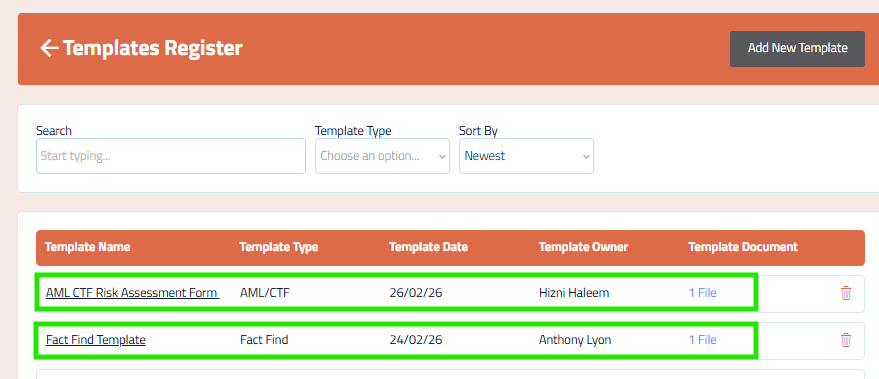
We have released the AML/CTF Risk Assessment Form in the Compliance Hub. You can use this form to complete your clients initial and ongoing risk assessments.
We have also updated the Fact Find Template in the Compliance Hub to incorporate the Risk Assessment Form into the existing Fact Find process.
Once completed, you can keep a record of the risk assessment in your primary CRM.
Using Xplan to record your risk assessment
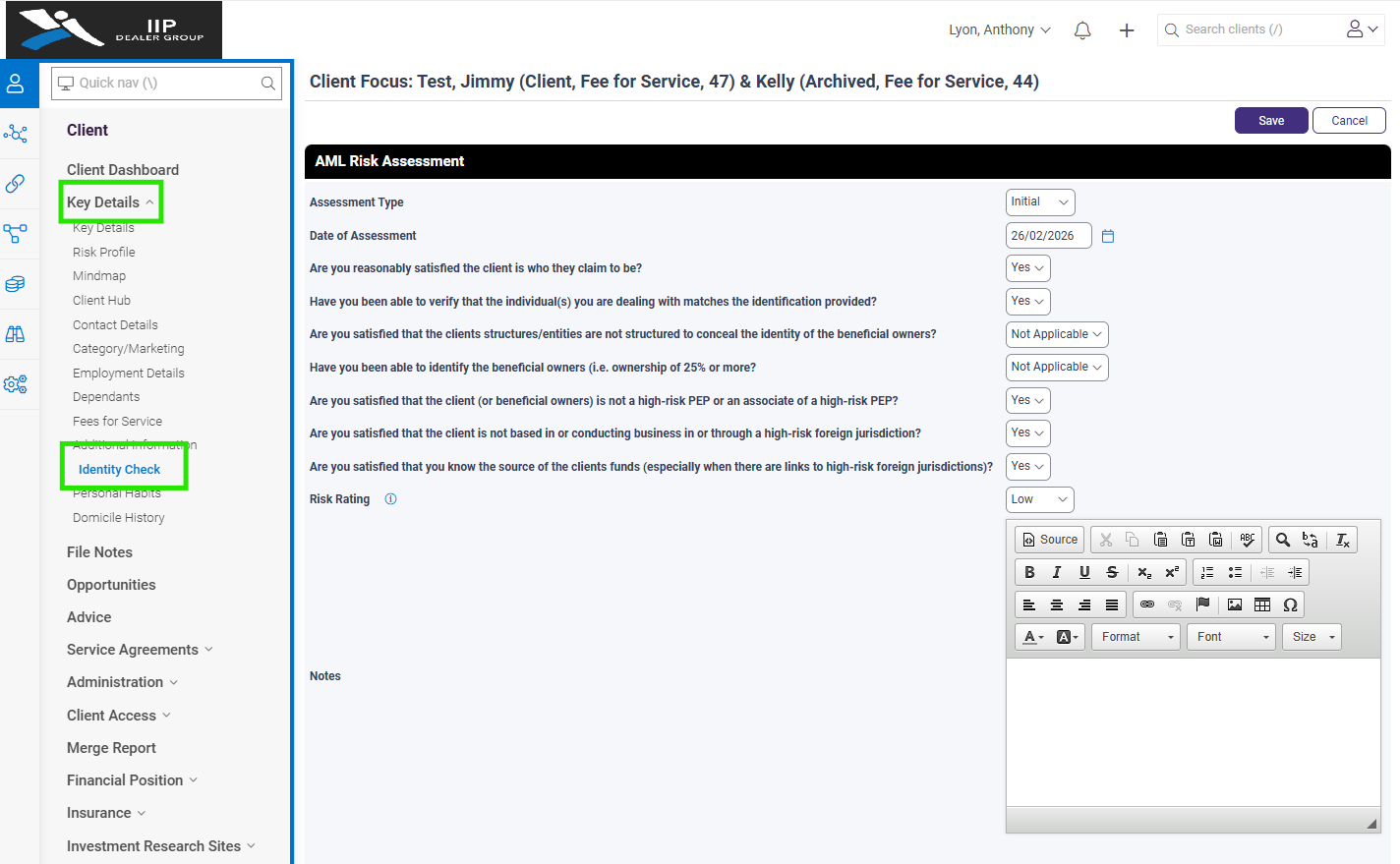
If you use Xplan, you can record your Risk Assessment in either the clients Key Details or in the Fact Find.
From the Key Details > Identity Check, you can input and responses to the AML Risk Assessment form and the client Risk Rating. You can also use the Identity Check element to record the clients identity and the verification method used to verify the client.
For new clients, the AML Risk Assessment form is also available in the Fact Find.
Using iComply2 Clients App to record your risk assessment
If you use the iComply2 Clients App, we are in the process of developing the Risk Assessment Form. We will release this in the coming weeks.
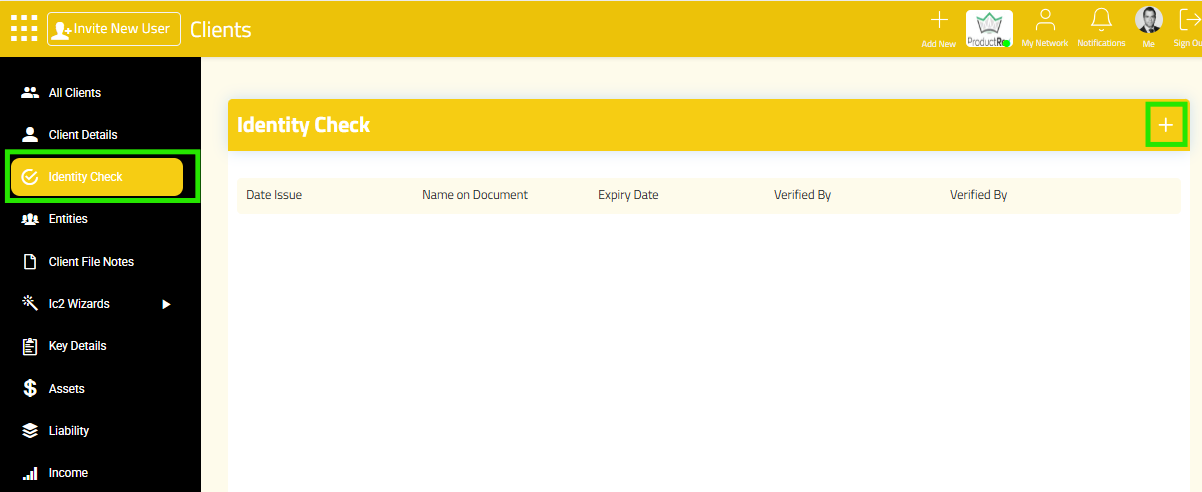
You can use the existing Identity Check element to record your clients identity and the verification method used to verify the client.
Do i need to retain a copy of the clients ID on file as verification?
No, you do not need to retain a copy of the client’s ID on your file as record of your verification. Retaining a copy of your clients ID documentation on your client file is a serious cyber security risk.
After verifying and recording the details of your clients identity, you should delete any physical copies of their ID.
How do i record the client ID verification details?
You have the following options when recording your clients ID verification details:
Complete the IFSA Form as record of your verification procedure. The IFSA Form would also need to be completed for product providers when opening super and investment accounts.
If using Xplan, complete the Identity check section to record your verification procedure (as shown above).
If using the iComply2 Clients App, user the Identity Check section to record your verification procedure (as shown above).
Once you have verified your client and completed the advice implementation (where applicable), you should delete any copies of client ID’s from your client file.
AUSTRAC’s New Information Gathering Powers?
Under the new Anti‑Money Laundering and Counter‑Terrorism Financing Act, AUSTRAC now has powers to
obtain documents and other information to make regulatory and enforcement decisions
gather evidence in a form that can be used in proceedings.
AUSTRAC has the powers to issue a Section 172A a notice, requiring you to attend an examination and answer questions on oath or affirmation. AUSTRAC can use this power if they believe on reasonable grounds, that a person has information or documents relevant to:
compliance with the AML/CTF Act, Rules or regulations
a prescribed criminal offence
What’s in a s172A notice
A s172A notice must be in writing. The notice may require you to:
attend an examination before an examiner
answer questions under oath or affirmation
produce documents either before or during the examination.
It is vital you keep up to date and accurate records on your ML/CT Assessment in the event of a s172A notice.
You can learn more about these powers and the examination process on the link below: